
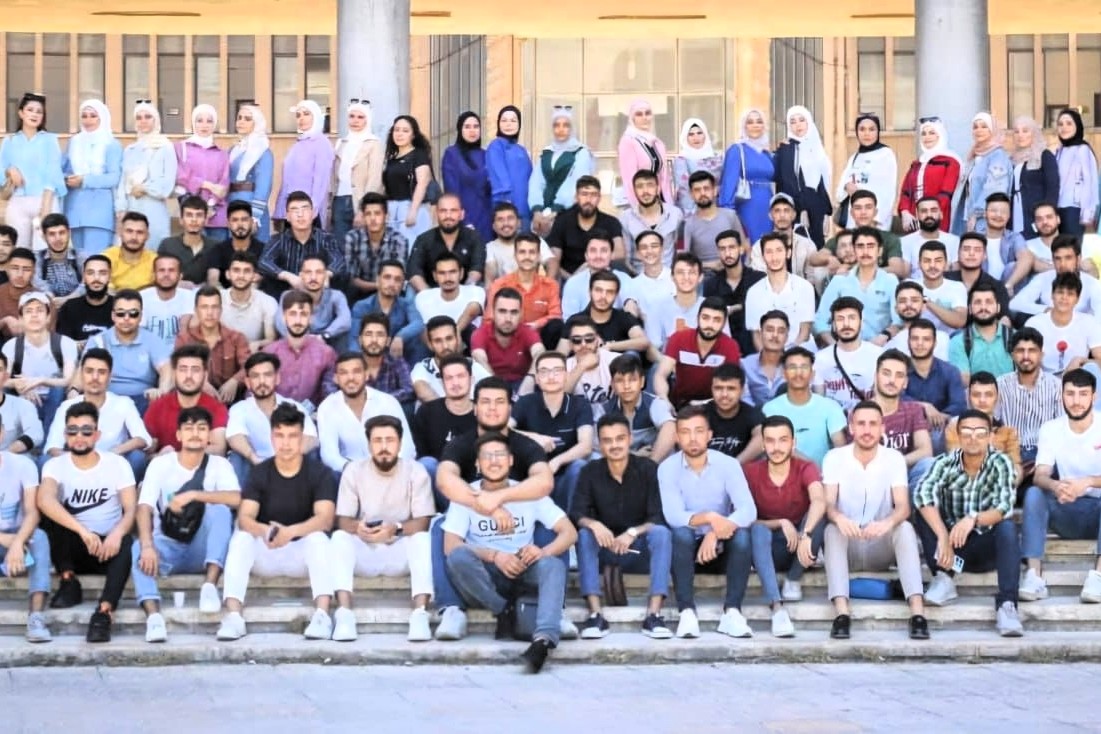
For many young people in Aleppo, building a future is not easy. Years of war…

Syria’s New Parliament: A Test of What Comes Next
For decades, Syria’s parliament was widely seen as a political formality—an institution that existed, but rarely shaped the direction of the country. In 2026, that image is being tested.
With the new Syrian People’s Assembly beginning its first sessions in July, Syria now has its first legislative body since the fall of Bashar al-Assad’s regime in December 2024. Its creation is more than a procedural step in the transition. It is an early test of whether Syria can move away from one-man rule and build a political system where institutions actually matter.
The expectations are enormous.
After years of war, repression, displacement, and political division, Syrians are not simply looking for another parliament with new faces. They are waiting to see whether this Assembly can become a real center of political debate, accountability, and lawmaking—and whether it can help shape the foundations of the country that comes next.
Who Sits in the New Parliament?
Under the Transitional Constitutional Declaration, the new People’s Assembly has 210 seats. The selection process was designed to represent Syria’s different regions and communities, with seats distributed largely according to population.
Aleppo, the country’s most populous governorate, received the largest share with 46 representatives, while the remaining seats were divided among Syria’s other governorates.
The Assembly’s mandate is set at 30 months and can be renewed. That limited term reflects the unusual nature of the current moment. This is not meant to be Syria’s final political system. It is a transitional parliament operating while the country attempts to rebuild its institutions and prepare for broader national elections.
But even as a temporary body, the decisions it makes could have long-term consequences.
More Than Just Passing Laws
The new parliament is entering office with responsibilities that go far beyond ordinary legislative work. In many ways, it is being asked to help design the political rules of a new Syria.
One of its most important tasks will be contributing to the creation of a permanent constitution. A specialized committee is expected to work on a constitutional draft that could eventually be presented to Syrians in a national referendum.
That process will not be simple. Questions about political rights, the balance of power, minority protections, the role of religion, and the structure of the state have divided Syrians for years. Writing a constitution will mean confronting those disagreements rather than avoiding them.
The parliament will also have the power to review existing laws and decrees inherited from previous governments. Some may be amended. Others may disappear entirely. In a country where laws were often used as tools of political control, this legal review could become one of the most significant parts of the transition.
Perhaps the biggest change, however, is the parliament’s promised oversight role.
The new Assembly is expected to question ministers, hold hearings, approve the national budget, ratify international agreements, and exercise broader supervision over the executive branch. On paper, these powers could make it far more influential than the parliaments Syrians knew under the previous government.
The real question is whether those powers will actually be used.
The Hard Part Starts Now
Creating a parliament is easy compared with creating a parliament that people trust.
The new People’s Assembly will have to prove that it is not simply a new version of an old system. Its members will be judged not by speeches or ceremonies, but by whether they are willing to challenge government decisions, debate openly, and respond to the concerns of ordinary Syrians.
And those concerns are urgent.
Millions of Syrians remain displaced. Large parts of the country need reconstruction. Families continue to demand answers about missing relatives and past abuses. The economy remains under enormous pressure, while questions of justice, reconciliation, security, and refugee returns remain unresolved.
These are not problems that parliament can solve alone. But the laws it passes—and the political battles it chooses to fight—will help determine how seriously the new state takes them.
For many Syrians, the new parliament represents both hope and uncertainty. It could become a place where different political voices finally compete through debate rather than force. Or it could fall into the same pattern as the institutions that came before it: powerful in name, but weak in practice.
That is why the opening of the new People’s Assembly matters.
The real story is not that Syria has a new parliament. The real story is whether this parliament will actually be allowed to govern, question, disagree, and shape the future.
That answer will tell Syrians far more about the direction of the country than any official declaration ever could.

Related Posts


Comments (0)