
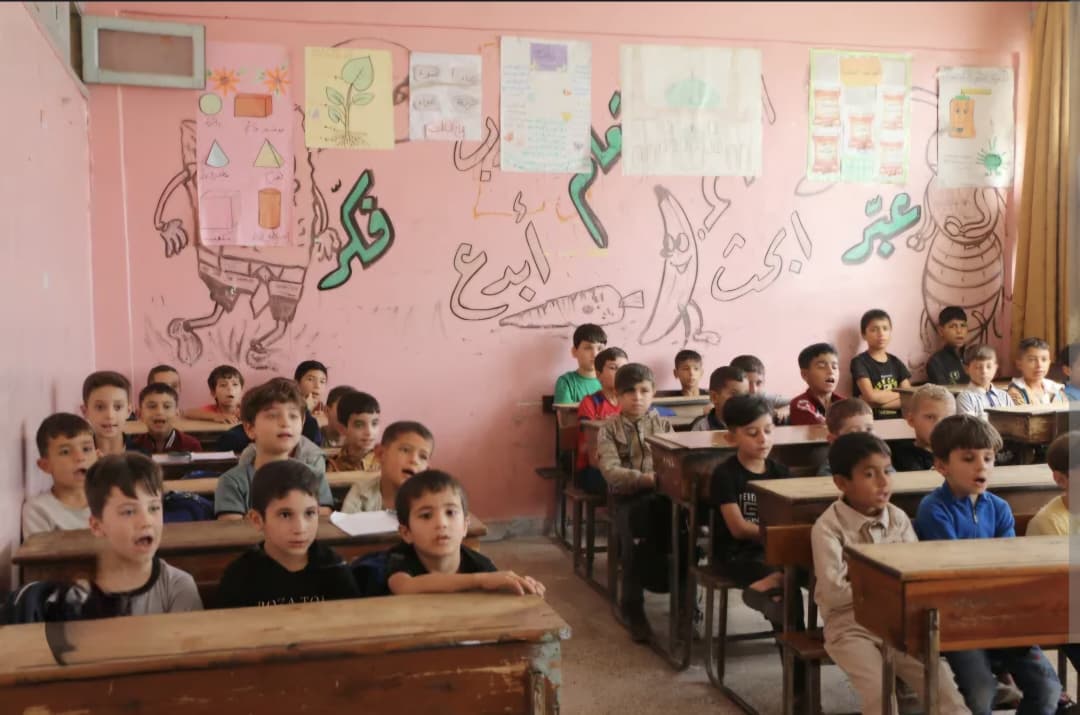
School bells will ring across Aleppo Governorate tomorrow, marking the beginning of a new academic…

Aleppo: The Beating Heart of Syrian Industry
Aleppo has always been more than a city of trade. For generations, it has been a city of makers.
Its economy was built by people who knew how to work with their hands, repair what was broken, improve what already existed, and create something useful from very little. From small workshops tucked into busy neighborhoods to large industrial factories on the edge of the city, Aleppo’s industry has always carried the same spirit: skill, persistence, and pride in honest work.
Al-Arqub: Where Small Workshops Keep Industry Alive
Al-Arqub is one of Aleppo’s oldest and most important industrial areas. It is not a place of polished buildings or quiet streets. It is a place of movement, noise, metal, tools, and people who know their craft.
Here, small and medium-sized workshops form the backbone of the local economy. You find metalworking, machining, mechanics, light textiles, spare parts, plastics, and repair work of every kind. Many of these skills have been passed down from father to son, from master to apprentice, and from one generation of workers to the next.
What makes Al-Arqub special is not only what it produces, but how it produces it. The workshops are practical, flexible, and deeply connected to the needs of the local market. When a machine breaks, when a part is missing, when a factory needs a quick solution, Al-Arqub often has someone who can find a way.
In that sense, Al-Arqub is more than an industrial zone. It is a living workshop for the city itself.
Sheikh Najjar: Industry on a Larger Scale
As Aleppo’s industries grew, the city needed space for bigger factories, wider roads, and more organized production. That is where Sheikh Najjar Industrial City became important.
Located northeast of Aleppo, Sheikh Najjar was built for large-scale manufacturing and investment. Its wide avenues, industrial plots, and planned zones made it possible for factories to expand and produce at a much larger scale.
The city became home to some of Aleppo’s major industries, especially textiles, food production, engineering, and chemical manufacturing. For many businesses, Sheikh Najjar opened the door to larger markets, exports, and more employment opportunities.
While Al-Arqub reflects the hands-on workshop culture of Aleppo, Sheikh Najjar represents its ability to grow, organize, and compete beyond the local market.
One Industrial Story
Al-Arqub and Sheikh Najjar are different, but they are part of the same story.
One is built on small workshops, inherited skills, and quick problem-solving. The other is built on larger factories, modern infrastructure, and mass production. Together, they show the full strength of Aleppo’s industrial life.
This strength did not appear by chance. Aleppo’s history as a center of trade and production goes back thousands of years. The city was once a key stop on the Silk Road, known for textiles, soap, craftsmanship, and commerce. That history is still present today, not only in old markets and traditional crafts, but also in modern machines, factory floors, and the determination of workers who continue to rebuild.
For many people in Aleppo, industry is not just a job. It is part of who they are. It is the dignity of providing for a family, the pride of mastering a skill, and the hope that work can help a community stand again.
Supporting Aleppo’s industrial communities means supporting real people: workshop owners, technicians, factory workers, apprentices, families, and small business owners. It means helping preserve skills that have shaped the city for generations. And most importantly, it means standing with people who are still choosing to build, even after everything they have been through.


Related Posts
Comments (0)