
School bells will ring across Aleppo Governorate tomorrow, marking the beginning of a new academic…
The Historic Mosque Architecture of Aleppo
Aleppo’s historic mosques are among the most distinctive features of the city’s architectural heritage. Shaped over centuries by Umayyad, Seljuk, Ayyubid, Mamluk and Ottoman traditions, they reflect the skill of generations of local builders and craftspeople.
Constructed largely from the yellow and grey limestone characteristic of Aleppo, these buildings combine practical design with remarkable stone craftsmanship. Their courtyards, arches, minarets, domes and carved decoration are closely woven into the fabric of the Old City and tell the story of Aleppo’s long cultural and religious history.
Courtyards at the Heart of the Mosque
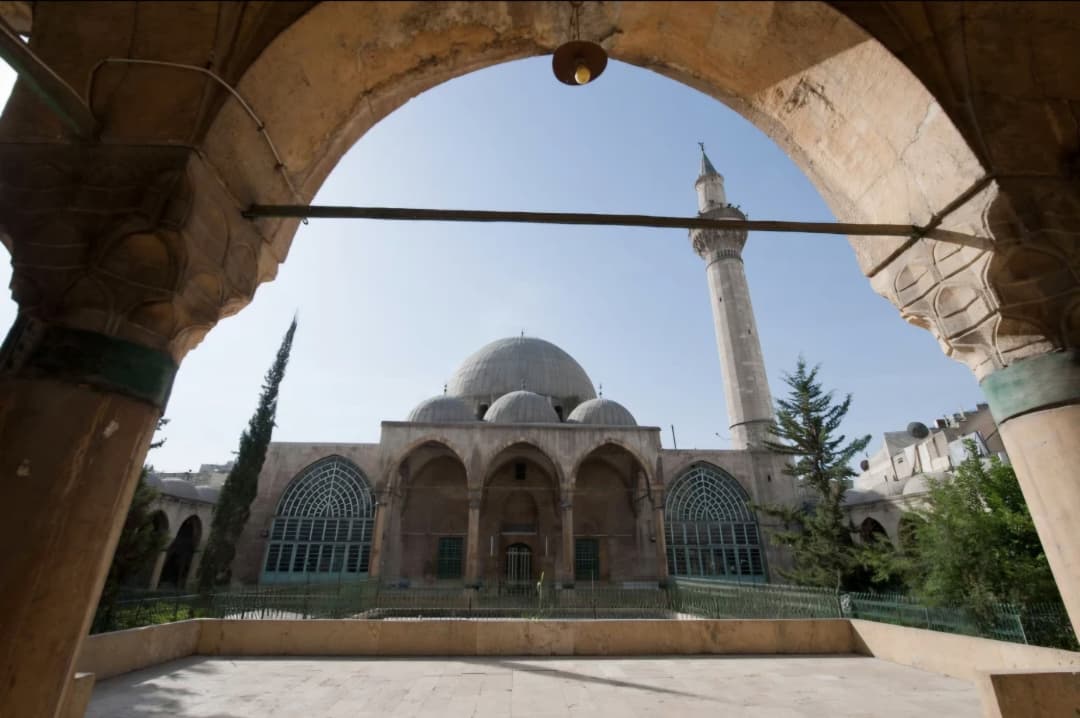
A defining feature of many historic Aleppine mosques is the central courtyard, or sahn. Surrounded by covered porticoes known as riwaqs, these open spaces provide light, air and a sense of calm within the dense streets of the Old City.
Many courtyards also contain a stone fountain used for ablution before prayer. The transition from Aleppo’s narrow streets and covered souks into a bright, open courtyard creates a striking contrast, offering visitors and worshippers a place of quiet within the surrounding city.
The design also responds naturally to Aleppo’s climate, providing shaded areas during hot weather while allowing air to circulate through the complex.
A Tradition of Stone Craftsmanship
Stonework is one of the most recognizable elements of Aleppo’s historic architecture. Builders developed decorative techniques that gave mosques, madrasas and other religious buildings their distinctive character.
Notable features include:
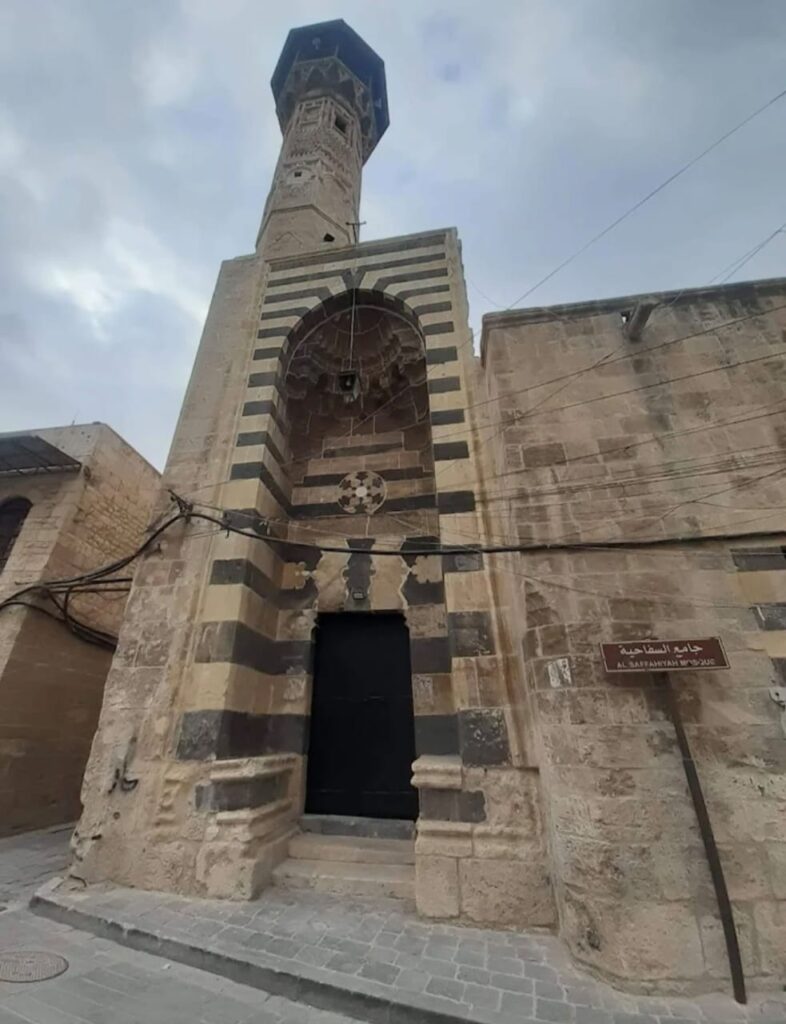
- Ablaq stonework: Alternating bands of light and dark stone used around entrances, arches, windows and façades, creating strong geometric patterns.
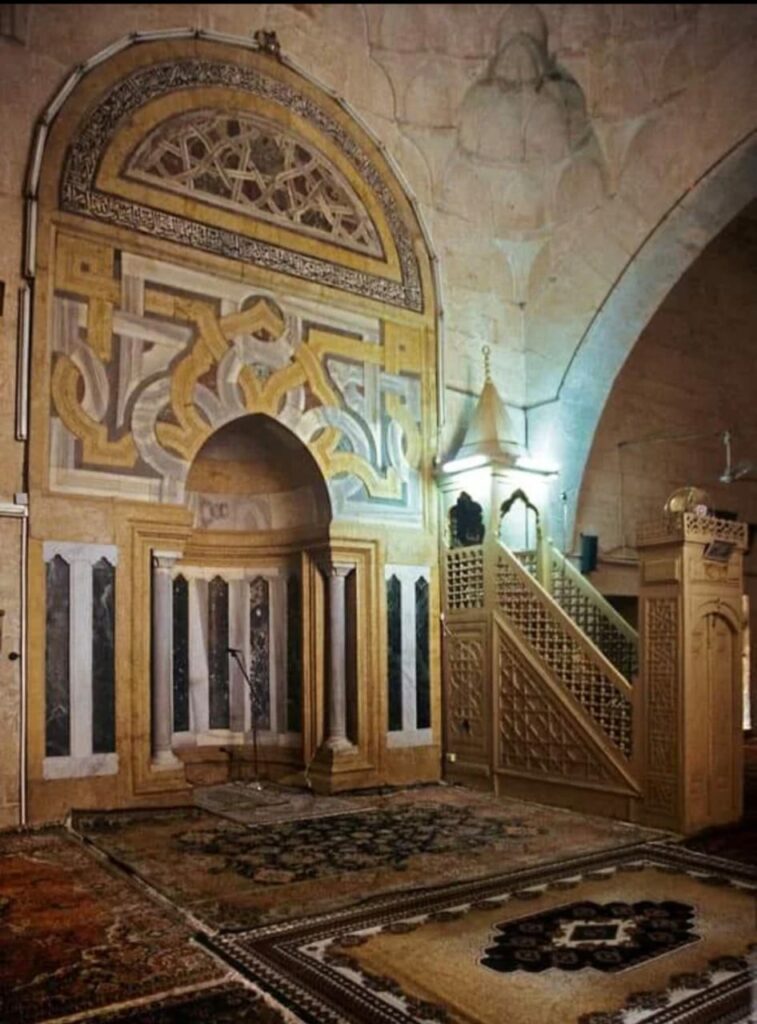
- Muqarnas decoration: Intricate, layered stone carving often found above monumental entrances, beneath domes and around important interior features.
- Calligraphic inscriptions: Arabic inscriptions carved into stone, often recording religious texts, the names of patrons or information about the construction and restoration of a building.
Together, these details demonstrate the close relationship between architecture, craftsmanship and faith in Aleppo’s historic built environment.
Minarets and Domes Across the Skyline
For centuries, minarets and domes formed an important part of Aleppo’s skyline.
One of the city’s best-known examples was the square minaret of the Great Umayyad Mosque of Aleppo, completed in the late 11th century. Decorated with carved inscriptions, arches and geometric bands, it became one of the most recognizable monuments of the Old City before its destruction during the conflict in 2013.
Later Ottoman-era mosques introduced another architectural form to Aleppo. Buildings such as Al-Adiliyya and Al-Khusruwiyya incorporated large central domes associated with Ottoman mosque design while continuing to use local stone and Aleppine construction traditions.
These buildings show how architectural influences from different periods were adapted to the materials, skills and character of the city.
Architecture Designed for Aleppo’s Climate
The construction of Aleppo’s mosques was not only about appearance. Their architecture also responded to the practical needs of everyday life.
Thick stone walls help regulate interior temperatures, providing protection from the intense summer heat while retaining warmth during colder months. Shaded courtyards, covered passageways and carefully positioned openings also help create more comfortable interior spaces.
The durability of local stone has allowed many historic structures to survive for centuries, despite periods of conflict, neglect and environmental exposure.
Preserving a Shared Heritage
Aleppo’s historic mosques are more than places of worship. They are part of the city’s collective memory and an important record of the people who built, used and cared for them across generations.
Their architecture reflects centuries of artistic exchange, skilled craftsmanship and adaptation to local life. Protecting and restoring these buildings helps preserve not only Aleppo’s physical heritage, but also the history and identity of the communities connected to them.
As the city continues to recover from years of conflict, safeguarding this architectural heritage remains an important part of preserving Aleppo’s story for future generations.

Related Posts



Comments (0)