
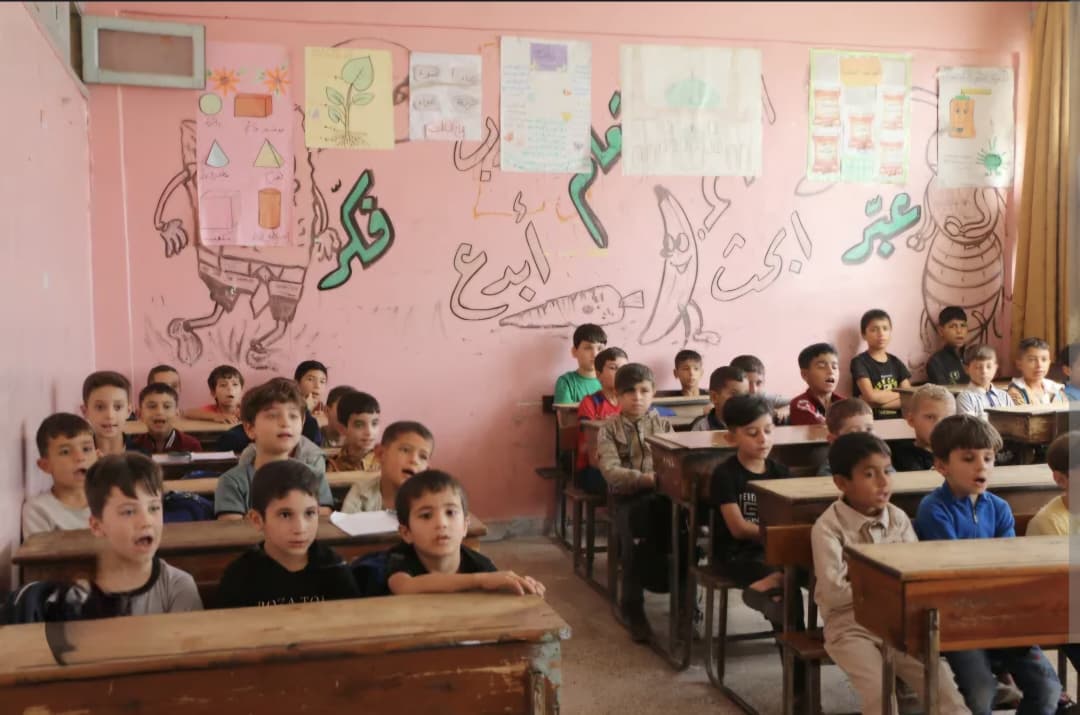
School bells will ring across Aleppo Governorate tomorrow, marking the beginning of a new academic…

Circassians in Aleppo: Historical Roots and an Enduring Cultural Legacy
Aleppo and its countryside have always been known for their rich social fabric, where different communities have lived side by side and helped shape the city’s identity. Among these communities are the Circassians, who brought with them a proud heritage from the North Caucasus and became an important part of Aleppo’s cultural and social life.
The Circassians originally came from the North Caucasus. After the end of the Russian-Circassian War in 1864, large numbers were forcibly displaced from their homeland and pushed toward the lands of the Ottoman Empire. Many families eventually settled in Syria, including in Aleppo Governorate.
In the Aleppo region, Circassians settled mainly in rural areas such as Khanasir, southeast of Aleppo, Manbij, and nearby villages. These places offered water, farmland, and space to rebuild their lives. Over time, they developed their communities, worked the land, and became known for their discipline, hospitality, and strong social bonds.
A major part of Circassian identity is Adyghe Khabze, the traditional moral code that guides behavior and social life. It emphasizes respect, dignity, hospitality, courage, modesty, and honoring elders. These values helped the Circassians preserve their identity while also building strong relationships with the wider Aleppian society.
The Circassians also contributed to agriculture and local development. They introduced practical tools and techniques, including horse- or ox-drawn wooden carts, improved plowing methods, and organized approaches to building and farming. Their role later expanded into many fields, with Circassians serving as military officers, doctors, engineers, teachers, and intellectuals.
Despite holding firmly to their language, customs, and traditions, Circassians integrated deeply into Syrian society. Their weddings, dances, music, and family customs remained important ways of keeping their heritage alive. Circassian folklore, especially dance, is known for its elegance and symbolism. Men’s movements often reflect courage and discipline, while women’s movements express grace, pride, and dignity. These dances are usually accompanied by traditional music, including the Pshine.
Traditional Circassian clothing is another powerful symbol of identity. The men’s costume, known as the Chokha or Cherkeska, is a long fitted coat designed for movement and horseback riding. Its most recognizable feature is the Ghazyr, small cylindrical holders across the chest once used for gunpowder cartridges. The outfit is completed with the Papakha wool hat, a decorated belt, and the traditional Kama dagger.
The women’s dress, known as the Saey, is elegant and modest. It is usually floor-length, fitted at the waist, and decorated with fine embroidery. Its long sleeves often include flowing extensions, giving the dress a graceful appearance. A silver belt and refined head covering complete the look, reflecting beauty, dignity, and status.
Circassians in Aleppo remain a living example of resilience. Their story carries the memory of exile, but also the strength of survival and belonging. By preserving their roots while contributing to the land that welcomed them, they became an inseparable part of Syria’s cultural history.


Related Posts
Comments (0)