
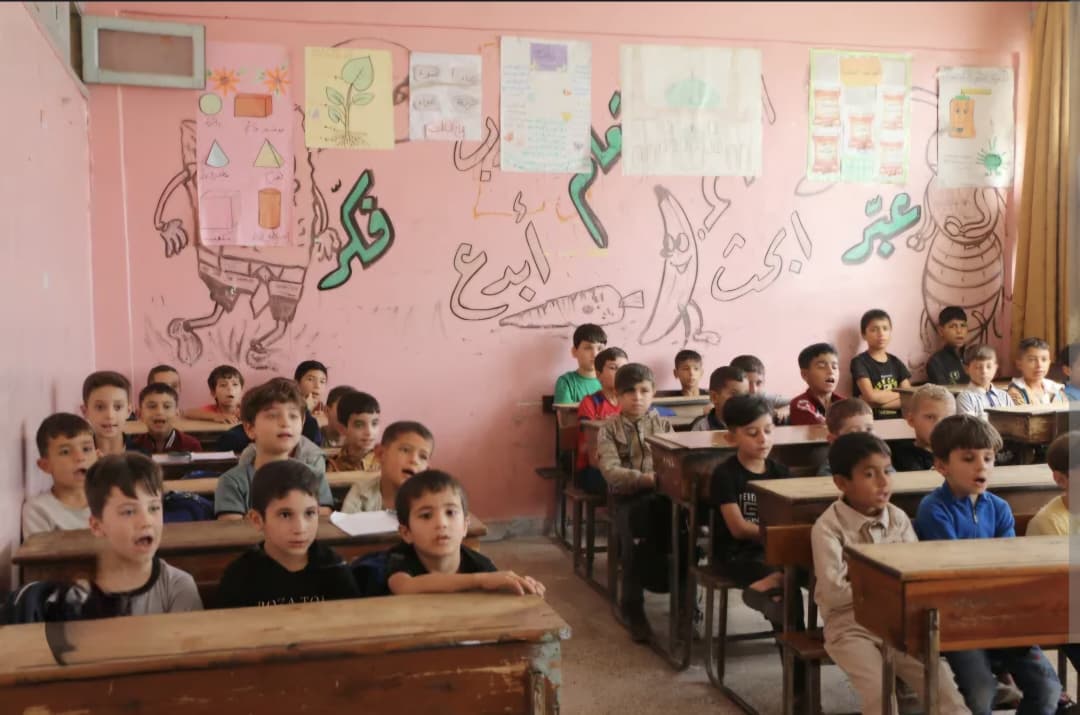
School bells will ring across Aleppo Governorate tomorrow, marking the beginning of a new academic…

Greeks in Syria: A long history and cultural interaction
The Greek community has played an important role in both the modern and ancient history of Syria, as the Greek presence in the region dates back thousands of years. The Greek community in Syria is part of the country’s social, cultural and economic fabric and has contributed to the enrichment of public life in various fields.
Historical Roots
The Greek presence in Syria dates back to ancient times, specifically to:
- The Hellenistic period (333-64 BC): After the conquests of Alexander of Macedon, Syria became part of the Seleucid Empire founded by one of his commanders.
- Roman and Byzantine period: Greek influence continued through the Byzantine Empire until the Islamic conquest.
- The Ottoman period: New Greek groups arrived in Syria, mainly for trade.
Demographics
The Greek presence was historically concentrated in several Syrian cities, the most important of which are:
- Aleppo: It had the largest Greek community before the Syrian civil war
- Damascus: Especially in the Bab Sharqi area
- Latakia and Tartus on the Syrian coast
Before the Syrian crisis, estimates of the number of Greeks in Syria ranged from 8,000 to 10,000, but many of them left the country during the war years.
Economic and social fields
The Greeks in Syria were characterized by their activity in several fields:
- Commerce: Especially the trade of fabrics and foodstuffs
- Industry: They established many workshops and small factories
- Medicine: Many Greek doctors were prominent in Syrian hospitals
- Arts: They contributed to enriching the Syrian art scene
Greek Institutions in Syria
The Greeks established several institutions to preserve their cultural identity:
- Orthodox churches: Such as the Church of the Lady in Damascus
- Greek schools: which taught the Greek language alongside the Syrian curriculum
- Social clubs: Apollon Club in Aleppo
Challenges and Migration
Greeks in Syria have faced several challenges throughout history:
- The Syrian Civil War: It led to the emigration of large numbers of them to Greece and other countries
- Political changes: Especially in the second half of the 20th century
- Issues of integration and identity preservation
Greeks in Syria form a cultural bridge between East and West, and although their numbers have decreased in recent years, their contributions remain an integral part of Syria’s richly diverse history. Syrian Greeks have a complex identity that combines belonging to their homeland Syria with preserving their ancient Greek heritage.


Related Posts

Comments (0)