
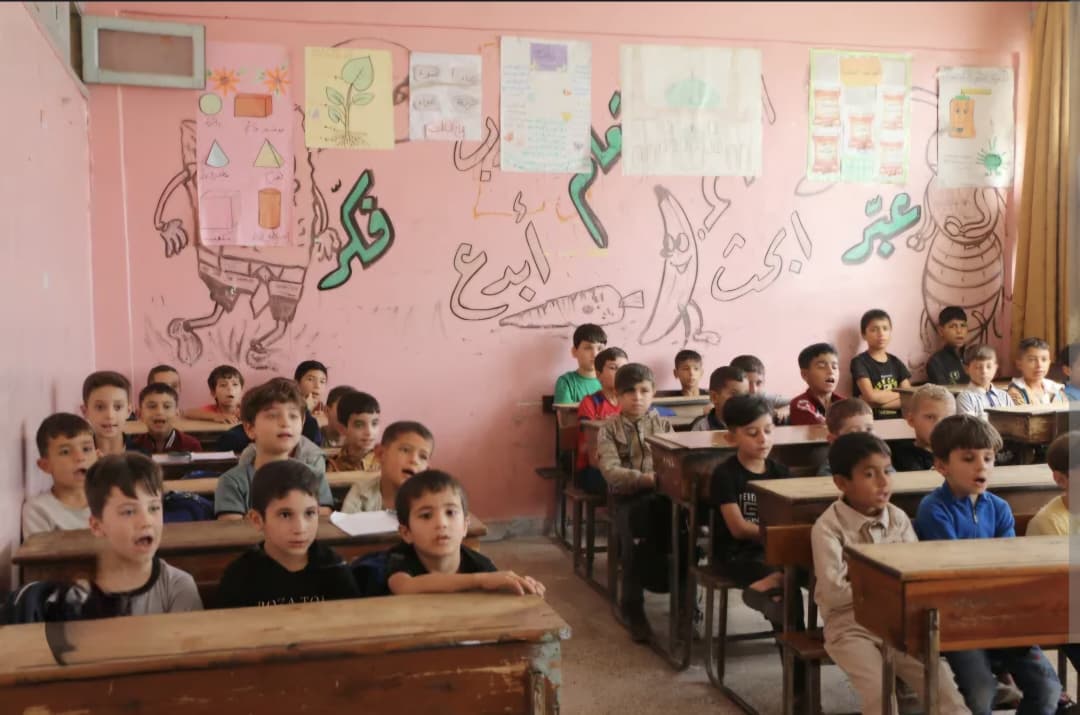
School bells will ring across Aleppo Governorate tomorrow, marking the beginning of a new academic…

Northeastern Syria: Context and Recent Developments
Northeastern Syria has for several years been under a mix of administrative and security arrangements involving multiple authorities and armed actors. During this period, the Syrian Democratic Forces (SDF) exercised de facto control over large parts of the region, including areas hosting significant numbers of internally displaced people and critical infrastructure. Humanitarian organizations have operated in this context through locally negotiated access and coordination mechanisms.
In recent weeks, control and security arrangements in parts of northeastern Syria have changed rapidly. The SDF’s administrative and security role has diminished in a number of locations over a short period of time. These changes have altered local governance arrangements and created uncertainty around security provision, civilian protection, and the continuity of basic services.
The current situation is taking place against the backdrop of wider regional and international developments affecting Syria. Changes in external political and security engagement have influenced how international actors engage in northeastern Syria, including in relation to counter-ISIS activities.
The recent transition has also coincided with reported changes in control over key economic infrastructure, including oil and gas facilities in some areas. The humanitarian impact of these developments is not yet clear and will depend on how governance and service delivery arrangements evolve.
Humanitarian Considerations
Humanitarian organizations are monitoring the situation closely, with particular attention to:
- Risks to civilians, including internally displaced people
- Access to basic services and livelihoods
- Freedom of movement for civilians and humanitarian staff
- Continuity and safety of humanitarian operations
Humanitarian actors continue to engage with relevant stakeholders to assess needs and maintain access, in line with humanitarian principles. All parties are reminded of their obligations under international humanitarian law, including the protection of civilians and the facilitation of humanitarian access.

Related Posts
Comments (0)